Buying Guide
Choosing among the best router collet tools starts with identifying what the part must do. Some listings are replacement collets for a named router family. Others are reducers, adapters, or extenders that change the bit size or add reach. These designs are not interchangeable, even when they mention the same nominal diameter. Begin with the router model, the existing collet size, the bit shank size, and the intended work. Then compare the documented specifications rather than relying on a similar-looking part.
Match the existing router and collet
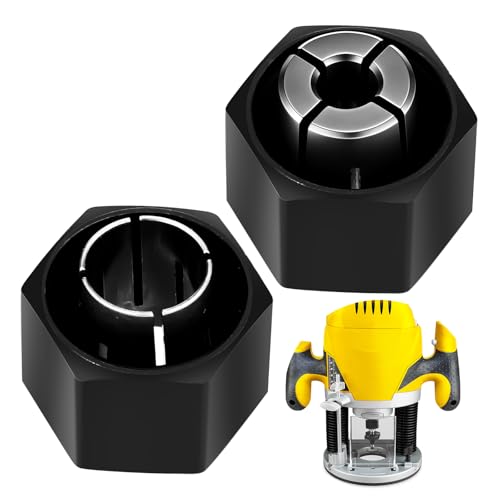
Compatibility is the first screening step. The BIG HORN 19694 lists Black and Decker and Delta models, while the Bosch 2610906283 and Bosch 2610906284 identify particular Bosch series. The Threlaco kit also lists several Dewalt and Bosch families. This type of model information is more useful than a broad statement that a collet is universal. A replacement part may fit one series but not another, even if both routers accept a 1/4-inch or 1/2-inch bit.
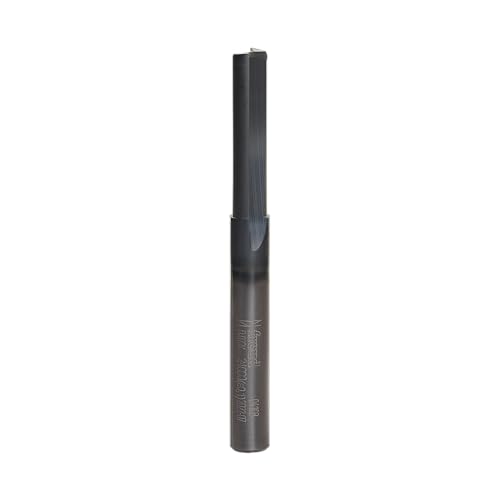
For a replacement-style product, compare the exact router model, collet diameter, outside diameter, length, and thread information when supplied. The BIG HORN listing provides 1.5-inch length and 20 TPI thread details. The Amana Tool RB-102 gives a 1/4-inch overall diameter, 1/8-inch shank diameter, and 1-inch overall length. Those details help distinguish a true fit from a nominally similar component.
Choose the right size strategy
A single-size reducer is appropriate when the required conversion is already known. The Amana Tool RB-102 and OWMOSYX adapters both address 1/4-to-1/8-inch use, but they do so in different formats. The Amana Tool product is a single focused reducer, while the OWMOSYX set supplies four adapters and describes use with router, CNC, lathe, and milling equipment.
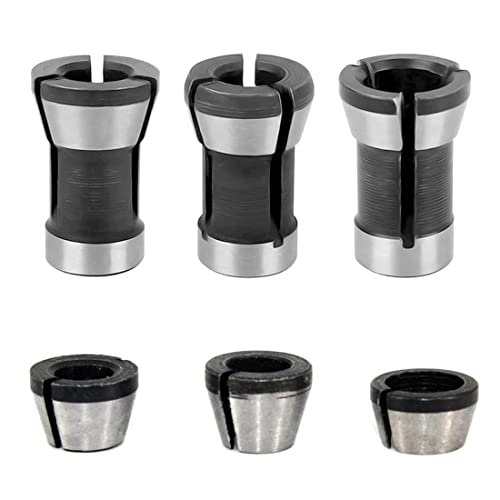
A multi-size kit is more useful when a shop works with several bit standards. Genmitsu provides 1/8-inch, 15/64-inch, 1/4-inch, and 5/16-inch options. SeonFook covers 8 mm, 6.35 mm, and 6 mm adapters. Threlaco includes both 1/4-inch and 1/2-inch collets. Do not assume that more sizes automatically means broader router compatibility; the mounting dimensions and tool model still need to agree.
Understand reducers and adapters
Reducers and adapters let a larger collet accept a smaller bit or can bridge different size systems. They are useful when the existing router cannot directly accept the desired shank size, but they add another interface between the tool and bit. The OWMOSYX listing describes a 1/4-inch collet accepting a 1/8-inch bit, while SeonFook documents several adapter sizes for engraving and woodworking equipment.
Look for a clearly stated input size and output size. If either side is vague, the product is difficult to evaluate from a listing alone. Material information is also relevant: the reviewed conversion products identify high-carbon steel, steel, or spring steel. These descriptions establish construction details, but they do not replace checking the router manufacturer’s requirements.
Decide whether an extender is appropriate
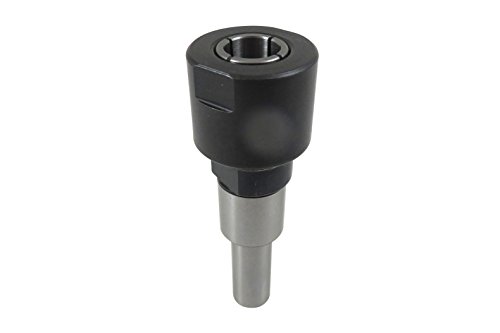
Extenders solve a different problem from reducers. The Taytools 465555 and Taytools 300008 both add 2-1/4 inches of travel and are designed for above-table bit changes. The 465555 pairs a 1/2-inch router collet with a 1/4-inch shank bit, while the 300008 pairs a 1/2-inch collet with a 1/2-inch shank bit. Select between them according to the bit shank, not simply the router collet size.
An extender creates an additional clamping connection. The Taytools listings instruct the user to place the extender in the router collet, insert the bit into the extension collet, and tighten both securely. That installation requirement is a central trade-off. An extender may be useful for reach and access, but it is not a substitute for a correctly sized direct collet when no extra length is needed.
Consider material and construction evidence
Spring steel appears in the Genmitsu and SeonFook evidence, while several replacement or reducer listings specify steel or high-carbon steel. These are useful construction signals because they describe the material supplied. Some listings also mention flexibility, wear resistance, rust resistance, or an auto-release design. Treat those as documented features, not as proof of a particular service life or routing result.
The BIG HORN auto-release design is distinct from the standard reducer and adapter formats. It is intended to help prevent frozen bits, whereas the Genmitsu kit emphasizes multiple diameters and clamping stability. The best choice depends on whether your priority is model-specific replacement, size conversion, or a broader set of options.
Verify before ordering
Before choosing from the best router collet tools, write down the router model and the bit shank diameter. For a kit, check every included size against the work you actually do. For a replacement component, compare the model list and physical specifications. For a reducer or extender, confirm both the receiving collet and the bit side. Also check whether the listing describes the part as a collet, reducer, adapter, or extender; those terms indicate different functions.
This comparison is based on public listing features and specifications, not hands-on testing. The evidence can show stated sizes, materials, compatibility, and intended applications, but it cannot establish fit for an undocumented router or predict results in a particular setup.
Final Recommendation
Genmitsu RCS-3P Router Collet Kit ranks first overall in this specification-based comparison under the published weighted criteria.
The Genmitsu RCS-3P is the first overall specification-based choice among the best router collet tools because it combines four documented sizes, spring-steel construction, and compatibility guidance for compact routers. It is a strong starting point for users who need flexibility rather than a single replacement part.
For a tightly defined 1/4-to-1/8-inch conversion, the Amana Tool RB-102 offers concise dimensional documentation, while OWMOSYX provides a multi-piece alternative. SeonFook is the broader metric-and-fractional adapter choice. Buyers repairing a named router should prioritize fitment: BIG HORN, Bosch 2610906283, Bosch 2610906284, and Threlaco each provide model or series information that can simplify selection.
The top router collet tools are not all solving the same problem. Taytools 465555 is the better documented extender for 1/4-inch shank bits, and Taytools 300008 is the corresponding 1/2-inch option. Confirm the router, collet, bit, and connection sizes before installation.
Frequently Asked Questions
Check the router model and the bit shank size first. Then identify whether you need a direct replacement, a reducer, an adapter, or an extender. A Bosch service collet, for example, is selected by router-series compatibility, while the OWMOSYX product is selected by its 1/4-to-1/8-inch conversion. These functions should not be treated as interchangeable.
Are reducer adapters the same as router collets?
No. A reducer or adapter changes the size relationship between the existing collet and the bit. A replacement collet is intended to take the place of a worn or missing router component. An extender adds reach and may use two clamping connections. The product type and both stated diameters should match the intended setup.
Genmitsu documents four sizes: 1/8-inch, 15/64-inch, 1/4-inch, and 5/16-inch. SeonFook documents 8 mm, 6.35 mm, and 6 mm adapters, and Threlaco supplies 1/4-inch and 1/2-inch collets. Coverage alone does not confirm fit, so compare mounting dimensions and router compatibility before purchase.
When would a collet extender make sense?
An extender may make sense when additional reach or above-table bit changes are important. Taytools 465555 and Taytools 300008 both document 2-1/4 inches of added travel. Choose the version that matches the bit shank, and follow the supplied installation direction to tighten both connections securely.
Not necessarily. The same nominal bit size does not prove that the outside diameter, length, thread, or mounting interface will fit. Model-specific listings such as BIG HORN and the Bosch service parts provide stronger compatibility evidence. If your router is not named, compare all available dimensions and consult the tool documentation before use.