Buying Guide
Choosing among the best histogram video monitors starts with the way you will use the histogram. A histogram helps reveal how tones are distributed, but it is most useful when paired with other exposure tools and a screen that remains readable in the shooting environment. The products here are camera field monitors with documented histogram functions; they are compared from public listing evidence rather than hands-on testing.
Match brightness to the location
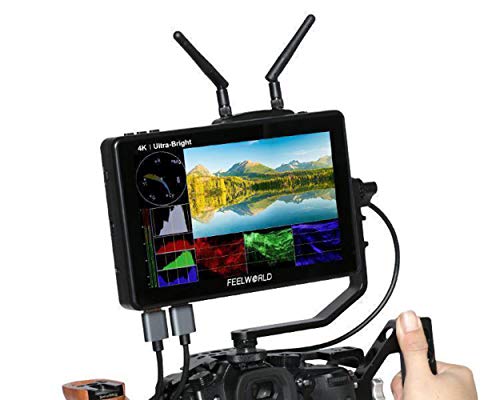
Brightness is one of the clearest differences in this category. The VILTROX DC-A1 is listed at 2800 nits, while the FEELWORLD FW279S is listed at 2200 nits and the VILTROX DC-X2 at 2000 nits. These specifications point toward stronger daylight visibility, although actual viewing also depends on screen angle, glare, and the surrounding light. The FEELWORLD F5 Prox lists 1600 nits, and the VILTROX DC 550 Pro, FEELWORLD F7 Plus, and FEELWORLD T6 list 1200, 1200, and 1000 nits respectively.
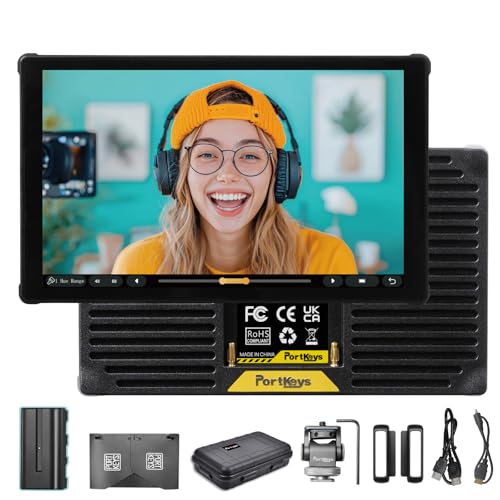
The Portkeys PT5 III listings state 800 nits. That may be a sensible trade-off for a lighter monitor, especially when portability matters more than direct-sun readability. A detachable hood, such as the one documented for the VILTROX DC 550, can also help manage stray light. The FEELWORLD FW279S listing specifically describes daylight viewing without a sun shield. The LILLIPUT A7S includes a rubber case with a sun shade, but its listing does not provide a numeric brightness figure.
Compare histogram and scope coverage
A histogram is valuable, but a broader scope set can make exposure decisions more precise. The VILTROX DC-X2 documents a histogram, vectorscope, RGB parade, and full waveform. The VILTROX DC-A1 lists brightness and RGB histograms plus a YUV parade waveform. These are strong options for operators who want to inspect luminance and color information in more than one way.
The FEELWORLD T6, FEELWORLD F7 Plus, FEELWORLD F5 Prox, VILTROX DC 550 Pro, and LILLIPUT A7S also document combinations of histogram, waveform, vector, false-color, or focus tools. The Portkeys PT5 III adds waveform, histogram, peaking, false color, and LUT monitoring in a lightweight touchscreen format. When comparing the best histogram video monitors, look for the specific scope you use rather than assuming every monitor includes the same set.
Check signal compatibility
Signal support can determine whether a monitor fits a particular camera or production chain. The VILTROX DC-A1, FEELWORLD T6, FEELWORLD F7 Plus, FEELWORLD FW279S, and VILTROX DC 550 Pro document 4K HDMI handling. The DC-A1 and T6 list 4K 60Hz capability, while the VILTROX DC 550 Pro and Portkeys PT5 III descriptions specify 4K 30Hz or 4K DCI input limits.
If your setup uses SDI, the FEELWORLD FW279S is the selected model that documents 3G-SDI alongside 4K HDMI. This makes it the more relevant choice for a mixed professional and consumer camera environment. Also distinguish input from output: a monitor may accept a high-resolution signal without outputting it at the same resolution.
Consider LUT and color workflows
LUT support is useful when you want to preview a creative or log-to-display look while recording. The VILTROX DC-X2 supports USB 3D LUT input and includes a built-in list. The FEELWORLD T6 documents support for 32 custom LUT files, while the FEELWORLD F7 Plus documents loading up to 32 LUT files through an SD card. The VILTROX DC 550 Pro also documents SD-card LUT import, and the Portkeys PT5 III includes 3D LUT monitoring.
These features describe monitoring and preview functions, not a claim about final recorded color. Before buying, verify the LUT file workflow, storage method, and camera output format required for your setup.
Balance size, weight, and mounting
A 7-inch monitor can make framing easier, while a 5.4- or 5.5-inch unit may fit better on a gimbal or compact cage. The Portkeys PT5 III is listed at 154 grams, making it the lightest documented option in this selection. The FEELWORLD FW279S is described as 320 grams and 22mm thick, and the FEELWORLD F7 Plus provides a larger 7-inch view.
Mounting details also matter. The FEELWORLD F5 Prox is described as compatible with cages, gimbals, tripods, and handheld setups. The VILTROX DC-A1 provides a 7-inch screen and multiple power methods, while the Portkeys PT5 III supports NP-F and USB-C power. The FEELWORLD T6 lists NP-F, DC 12V, and USB-C options. These documented choices can reduce the need for a single fixed power arrangement, but the listings do not establish battery runtime.
Final recommendation
VILTROX DC-X2 6-inch Monitor ranks first overall in this specification-based comparison under the published weighted criteria.
VILTROX DC-A1 is the first overall specification-based choice among the best histogram video monitors. Its 2800-nit screen, 7-inch Full HD format, multiple histogram types, waveform support, 4K 60Hz HDMI, and three documented power paths give it the most specification-aligned all-around specification profile in this comparison.
For a more complete scope toolkit, the VILTROX DC-X2 is a close alternative with vectorscope, RGB parade, full waveform, 3D LUT input, and 2000-nit brightness. Choose the FEELWORLD FW279S when 3G-SDI is important, or the FEELWORLD T6 when 4K 60Hz, custom LUT files, and vertical markers fit your workflow. The FEELWORLD F7 Plus is a practical larger-screen LUT option, while the FEELWORLD F5 Prox and Portkeys PT5 III suit more compact rigs.
Among the top histogram video monitors, the right choice depends on whether brightness, signal connectivity, scope depth, or portability is the deciding factor. The LILLIPUT A7S is another option when a large 7-inch display, shortcut keys, and a supplied sun shade matter more than LUT support. Treat the listed technical specifications as a comparison foundation and confirm current compatibility with your camera, cable type, battery system, and mounting hardware before purchase.
Frequently Asked Questions
What does a histogram do on a video monitor?
A histogram displays the distribution of tones in the camera image, helping you inspect whether the image is concentrated toward shadows, midtones, or highlights. It is an exposure aid, not a replacement for judging the shot’s composition or intended look. Some selected models pair the histogram with waveform, false color, RGB parade, or vectorscope tools for additional analysis.
Which selected monitor is best for bright outdoor shooting?
The VILTROX DC-A1 has the highest stated brightness at 2800 nits. The FEELWORLD FW279S, VILTROX DC-X2, VILTROX DC 550 Pro, and FEELWORLD F5 Prox also list high brightness figures. The FW279S additionally describes daylight viewing without a sun shield, while the VILTROX DC 550 lists a detachable hood. The LILLIPUT A7S includes a sun shade, though its listing does not state a numeric brightness rating.
Do these monitors support 4K cameras?
Several do, but the stated limits differ. The VILTROX DC-A1 and FEELWORLD T6 document 4K 60Hz HDMI handling. The FEELWORLD FW279S and FEELWORLD F7 Plus also document 4K support, while the VILTROX DC 550 Pro and Portkeys PT5 III descriptions specify 4K 30Hz or 4K DCI input limits. Check the exact camera output and monitor input requirement before buying.
Are batteries included with every monitor?
No. The selected Portkeys PT5 III battery configuration documents an NP-F550 battery, while the FEELWORLD FW279S and FEELWORLD F7 Plus listings state that a battery is not included. Other listings vary in what they document. Confirm the package contents and required battery type before ordering.
Are the best histogram video monitors also suitable for LUT preview?
Many selected models document LUT support, including the VILTROX DC-X2, FEELWORLD T6, FEELWORLD F7 Plus, VILTROX DC 550 Pro, and Portkeys PT5 III. LUT support is for monitoring or previewing a look according to the supplied listings; it does not by itself indicate how the camera records the final footage.